
The builder digs the foundation and hits a pipe that is not on the topographic plan. The structural designer moves a beam by 40 centimetres, sketches the fix on one page and signs it. That page is a site instruction (dispoziție de șantier), and the owner’s question is whether it is enough or whether the works must stop until a modification permit arrives.
Almost everything online about site instructions quotes the implementing rules of Legea 50/1991. That law was repealed when the Urban Planning Code (Legea 169/2026) came into force, and the Code regulates it mainly in two places: art. 293 para. (8) and the definition in Annex 1. What was repealed and what stayed is in what the Codul urbanismului repealed.
An exception to the modification permit
Article 293 starts from the rule that a change of brief needs a modification permit, applied for before the change is built (para. (1)-(2)). Paragraph (8) makes the exception: on the basis of a site instruction, local changes to the technical solutions in the authorised documentation may be accepted without a new modification permit. The condition in the same paragraph is that the designer draws up the instruction beforehand.
The article’s other two exits, the modification permit and restarting the procedure, are explained in the modification permit, step by step. This piece is about the first one, because it is the only one for which the Code describes no procedure at the counter.
The seven conditions in Annex 1
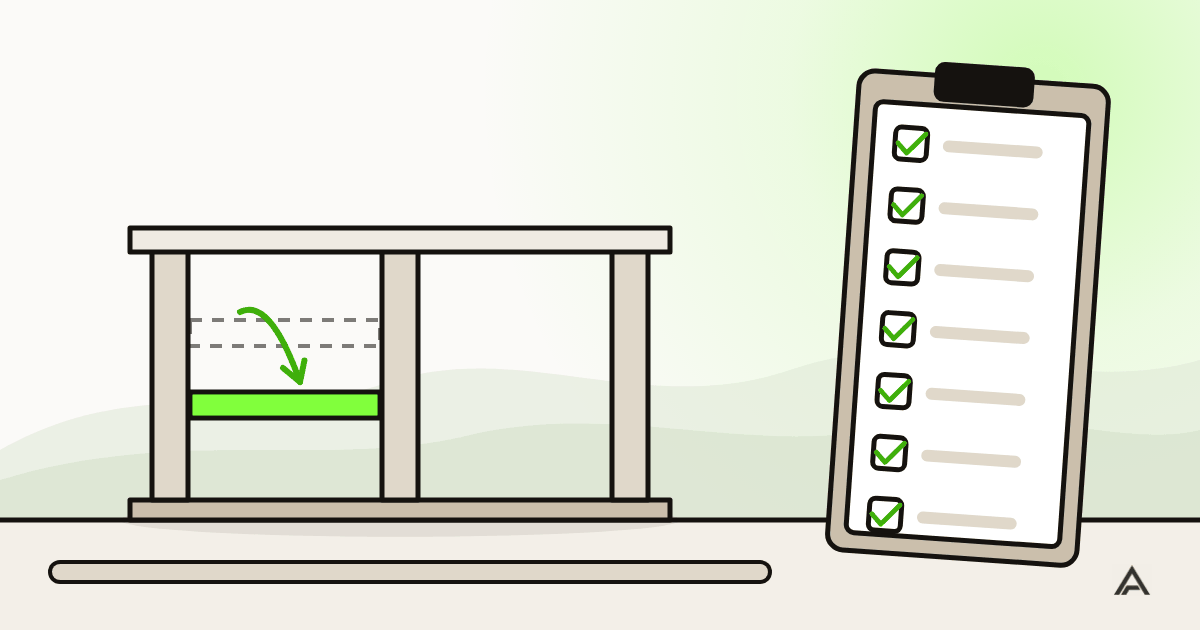
Article 293 only says “local”. The Annex 1 definition says what that means: a site instruction is a correction of the technical documentation on the basis of which the issuing authority may admit local changes to the technical solutions, when all of the conditions below are met. In short, with the letter from the definition:
| Letter | Condition | What breaks it, for example |
|---|---|---|
| a) | the use recorded in the original permit does not change | a plant room becomes an office |
| b) | the endorsements, agreements, opinion and act of the environmental authority annexed to the permit are respected | a solution outside the terms of a utility endorsement |
| c) | the urban planning documentation in force and Legea 287/2009 (Civil Code) are respected | a new window towards the neighbour, below the Civil Code distance |
| d) | siting, height regime, POT, CUT, building line, minimum distances to the boundaries and the building’s appearance do not change | an enclosed terrace, a partial storey, a redesigned facade |
| e) | the strength and stability of neighbouring buildings are not endangered | a deeper excavation next to the neighbour’s party wall |
| f) | fire safety regulations are respected | a narrowed escape route |
| g) | energy efficiency is ensured | thinner insulation than in the design |
Condition d) rules out the most cases. Every item in it except the last can be checked on a drawing; the planning indicators among them are explained on the page about POT, CUT and UTR. The last one, the building’s appearance, has no measure. On our reading, any change visible from outside puts a site instruction in doubt: the roof shape, the openings in the facade, the finish material. The Code gives no threshold, so this is a reading, not a rule.
The opening example passes if the moved beam stays inside, does not change the height and does not touch the neighbour’s foundation. If instead the pipe forces the foundation, and so the building, 40 centimetres towards the boundary, the change affects, on our reading, the siting conditions in letter d) and needs a modification permit.
Who writes it, who signs, who checks it
Three things follow from Annex 1 and the articles around it.
- The designer of the works draws it up. Article 426 para. (3) adds that designers sign the site instructions they draw up. Issuing them is part of the technical assistance the designer provides throughout the works, alongside findings notes (art. 521 para. (5) lit. f) and g)).
- The owner agrees in writing. The definition requires the written agreement of the beneficiary, investor, administrator or project manager, as applicable. Without the written agreement of the owner, or of whoever represents them as applicable, the instruction is not complete.
- The check is not, as a rule, the project checker’s. Annex 1 speaks of the content being checked under the Code, and art. 445 para. (5) says the technical checker is not responsible for checking site instructions, except for strengthening works and listed monument buildings. When a checker is required for the design is in project checker.
The site supervisor, who works for you, does not appear in the definition. Their role towards the design, in particular the non-conformity reports they send to the designer, is in site supervisor and RTE.
What the Code does not say
We searched the Code for the expression in all its forms and it appears in five places: arts. 293, 426, 445, 521 and Annex 1. Several things practice will have to settle are missing from them.
- No filing procedure at the town hall. Annex 1 says the issuing authority may admit the changes, but no article describes how the instruction reaches it, in what time or with what act. Article 293 para. (8) puts the weight on the designer. If your town hall wants to see it, ask at the start of the works, not afterwards.
- No form. Among the 29 forms of Ordin 975/2026, described in the Codul urbanismului forms, there is none for the site instruction. The templates in circulation come from the old regime or from individual town halls.
- A small mismatch in wording. Article 293 speaks of works without a new modification permit, Annex 1 of works without a new building permit. For the owner the effect is the same, but if a town hall reads it differently, this is where the argument will be.
- Who checks it, on an ordinary house. Annex 1 requires the content to be checked without naming the checker, and art. 445 para. (5) excludes the technical checker outside strengthening works and monuments. For other works, the Code does not say who does the check.
Before you sign your agreement
- Was the instruction written before the change was built? Article 293 para. (8) requires it beforehand.
- Does it meet all seven conditions, especially letter d)? Ask the designer to say so in writing.
- Does anything visible from the street or from the neighbours change? If so, treat the change as a possible modification permit.
- Keep the signed instruction with the works documents. It is the main proof that the change did not need a new permit.
The Code ties the instruction to two documents. Article 293 para. (8) speaks of the authorised technical documentation, the dossier the permit was issued on, whose content is on the PAC page. Article 521 para. (5) places it in technical assistance, where the designer amends the execution documentation. The two projects are not the same thing, and the difference is in the permit project is not the build project.
This article is analysis, not legal advice. The provisions cited are from Legea 169/2026, published in Monitorul Oficial no. 661 of 10 August 2026. Romanian legal terms are kept in the original where no exact English equivalent exists. Check your own situation with the issuing authority.