
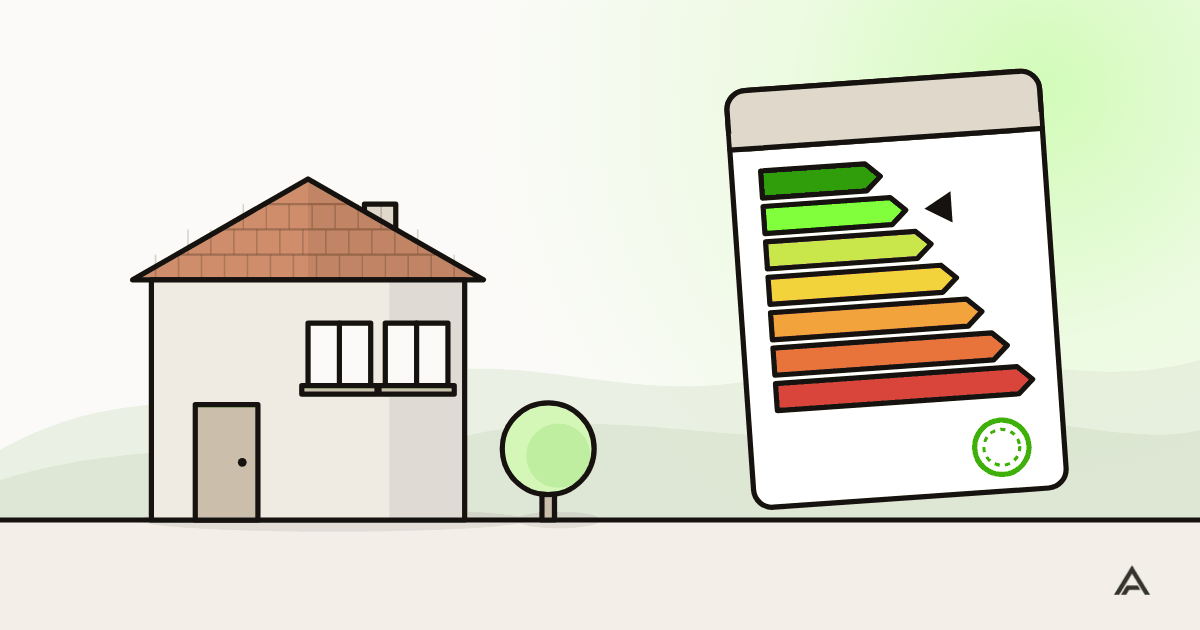
An ordinary new house needs an energy performance certificate before handover. Law 372/2005 says the record of the handover at completion of works, if not accompanied by a copy of the certificate, is void by law (art. 23 para. (2)). The certificate is prepared by an energy auditor for buildings, at your request, and you present it to the handover committee as an original.
What the law says, by stage
The obligation appears at three different moments in a building’s life, and the rules are not the same.
| Moment | What must exist | Article of Law 372/2005 |
|---|---|---|
| Handover of a new building | The certificate as original at the committee; a copy attached to the record | 23 para. (1) |
| Sale or letting | A copy of the certificate, made available before the contract | 22 para. (1) |
| Major renovation | A new certificate, if the works change energy consumption | 21 para. (1)-(2) |
The certificate is valid for 10 years from the issue date entered in it (art. 21 para. (2)). The exception is a building that has a valid certificate and undergoes major renovation that changes its energy consumption.
At handover, concretely
Article 23 paragraph (1) sets the order. For buildings under construction, the certificate is prepared by the care of the investor, meaning you as beneficiary. You present the original to the handover committee, a copy is attached to the record, and the certificate becomes part of the building’s technical book.
The consequence of non-compliance is written plainly in paragraph (2): the record drawn up without the copy of the certificate is void by law. The law thus treats the handover as not validly concluded, and everything that follows depends on it. For what comes after handover, from the technical book to land registration, see the electronic technical book and registering the new house. The handover procedure itself is on the handover at completion of works page.
The text of article 23 does not distinguish by the type of authorisation. What the handover looks like for notified works carried out in-house is in signing off a house you built yourself.
Who makes it and what it must contain
The certificate is prepared and issued by the energy auditor for buildings, at the request of the investor or owner (art. 21 para. (2)). Ordering it goes into your end-of-works calendar, like any other piece you commission separately.
The law fixes what it contains: calculated values of primary and final energy consumption, including from renewable sources, and CO2 emissions (para. (5)), plus recommendations to reduce consumption, with the estimated saving (para. (6)). The form and framework content are approved by ministerial order, including the coding of each certificate and its registration in the national database (para. (7)).
One detail that costs money: certificates issued without a unique registration code are void by law (para. (8)). Before you pay, ask whether the auditor registers it in the national database.
A preliminary certificate does not replace the certificate
You can receive a certificate before handover, as a simulation of the building’s performance, for the designer or builder. The law calls it provisional and says it is not uploaded with a unique number to the database (art. 21 para. (4^1)). At handover you present the final certificate.
If you sell the house before handover, article 23 paragraph (3) obliges you to give the buyer information on energy performance, as a certificate without a unique code and without registration in the database. The final certificate remains mandatory at handover.
When it does not apply
The minimum performance requirements are not mandatory for five categories listed in article 8 paragraph (1): protected buildings and monuments where the requirements would unacceptably change their character or appearance, places of worship that do not provide interior comfort, temporary buildings used for up to 2 years, buildings used less than 4 months a year, and detached buildings with a useful area under 50 sq m. Paragraph (2) also exempts industrial and agricultural buildings, external garages and spaces open on one or more sides. For those in paragraph (1), the certificate can be prepared only at the beneficiary’s written, justified request, and for those in paragraph (2) neither a certificate nor an audit report is prepared (art. 21 para. (4)).
An ordinary dwelling is not on these lists, unless it is under 50 sq m useful or used less than 4 months a year.
How it connects to the Urbanism Code
The code refers expressly to Law 372/2005. Article 402 paragraph (2) says the requirements on the energy performance of buildings are set by Law 372/2005 and by the subsequent technical regulations. The file piece at permitting, the NZEB report, is described in the NZEB report, and the code’s other sustainability requirements in sustainability in the Code. The certificate is the piece at the end, the report is the piece at the start, and they do not replace each other.
This article is analysis, not legal advice. The provisions cited are from Law 372/2005 on the energy performance of buildings, in the form consulted on 1 October 2026, and from Legea 169/2026, published in Monitorul Oficial no. 661 of 10 August 2026. Check your own situation with the issuing authority.