
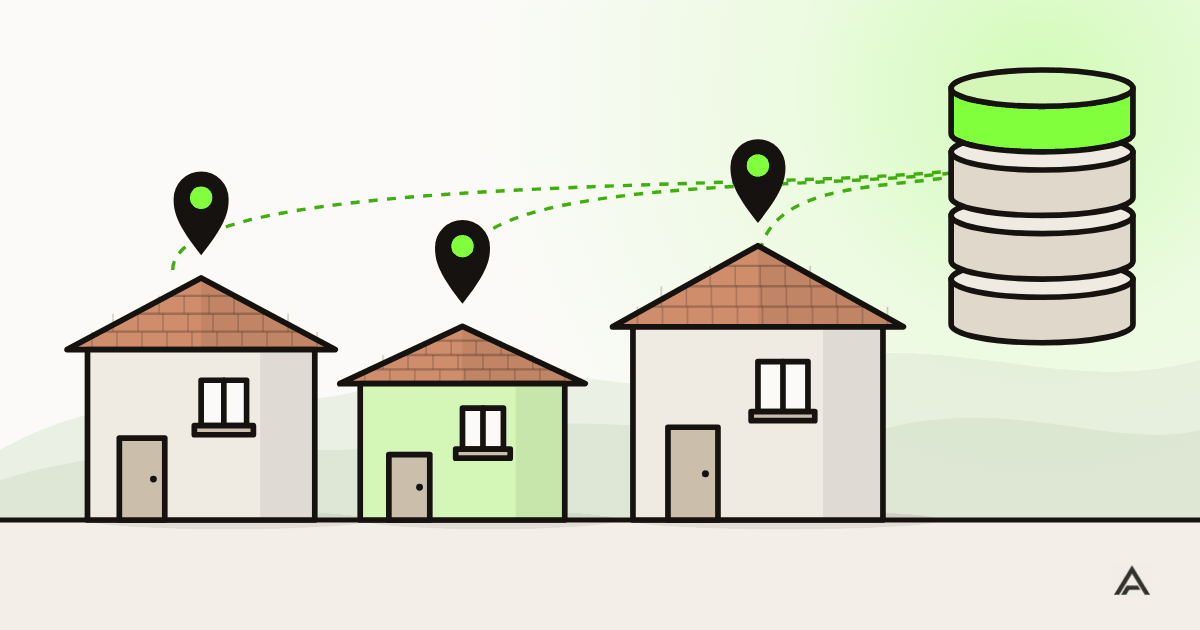
The two names circulate mixed up, documentation included. Both are in the law, but they do not mean the same thing: the Registrul național al clădirilor is a component of the Registrul național al construcțiilor, not the other way round.
What it is, by its own definition
Article 415 paragraph (1) describes it as an IT system set up and organised nationally, holding the database of permanent constructions built from public or private funds, both existing and new. The exception covers special constructions authorised by institutions in the national defence, public order and national security system.
Keep the word permanent in mind. This is not a register of building sites, it is a register of constructions.
Paragraph (3) names who keeps it: the ministry responsible for spatial planning, urbanism and construction, on the basis of information transmitted to it. Paragraph (5) adds that access is tiered, the highest tier belonging to authorities with competence in construction, and paragraph (6) conditions public access on data-protection law.
The buildings part already has a public address: Ordinul 975/2026 (article 2 paragraph (4)) points to registrulcladirilor.gov.ro for the technical details on how data is taken from the forms.
Where buildings appear
Article 415 paragraph (7) gives buildings a register of their own: the Registrul național al clădirilor is a component of the Registrul național al construcțiilor and holds the georeferenced database of the public and private buildings that make up the national building stock. Paragraph (9) makes it a base register, part of the Registrul național al registrelor. Article 417 paragraph (5) then lists what it will hold for buildings: use, ownership and location, urbanism regime, functional and fiscal zoning, energy performance, seismic risk class, fire protection, accessibility provision in public buildings for people with disabilities, and inclusion in energy renovation or seismic strengthening programmes.
That is an inventory of the condition of the building stock, not a permit file. Anyone who has read about the electronic cartea tehnică will recognise the direction.
Who writes into it
Article 416 paragraph (2) lists the sources for the register of information on construction performance, another component of the national register, and the list explains why the register is not filled in once. Writing into it are: the diriginți de șantier during execution, the proiectant general also during execution, the holder of the autorizație de construire, the beneficiary, technical experts with the synthesis of their expert reports, and I.S.C. officials with findings made during inspections.
Six sources, two of which are you: the permit holder and the beneficiary. This is not a register the administration alone fills in about you.
When it first touches you
The concrete moment is not at recepție, as you might expect, but before works start. The first contact comes with the permit application itself: point 9 of the anexă tehnică in form F_A_01 of Ordinul 975/2026 records the building’s communication to the Registrul național al clădirilor, with the NIS assigned or confirmed; the whole set of forms is in the Codul urbanismului forms. Then article 278 paragraph (5) requires that, together with the notice of works starting, the holder, through the chosen specialist designer, uploads into the register, electronically signed, the proiect tehnic de execuție with its referate de verificare, plus the autorizație, the avize and the acorduri.
So the upload into the register falls on the same day as the start notice, the subject of the two înștiințări. If you have not designated the designer who performs the upload, you have announced the start without doing the step that goes with it.
What it is used for
Article 416 paragraph (3) states the purpose plainly: identifying malfunctions in the performance of constructions, including at the level of regulation, and improving or drafting technical regulations. Article 417 paragraph (1) calls the whole body of information the national digital database on construction performance, and paragraph (2) ties it to assessing and comparing in-service behaviour across the entire life of the construction.
In other words, the data is not sitting there as an archive. It is the raw material for the next set of norms, including those that will decide what future projects are asked for, as already happens with the consequence class.
The documents you prepare for authorisation, which then end up here, are described on the page about the building permit.
The name matters when you search
Search for it as the register of clădiri and you find only one part: article 415 paragraphs (7) to (9) and the list of data in 417 paragraph (5). The whole register, with its sources and its purpose, is in articles 415, 416 and 417, under the name of the register of construcții.
This article is analysis, not legal advice. Provisions are cited from Legea 169/2026, published in Monitorul Oficial no. 661 of 10 August 2026, and form F_A_01 from Ordinul 975/2026, published in Monitorul Oficial no. 711 bis of 26 August 2026. Check your own situation with the issuing authority. Romanian legal terms are kept in the original, because the Romanian text is the one that governs.